33s on Stock Gears? Why Your Truck Feels Gutless
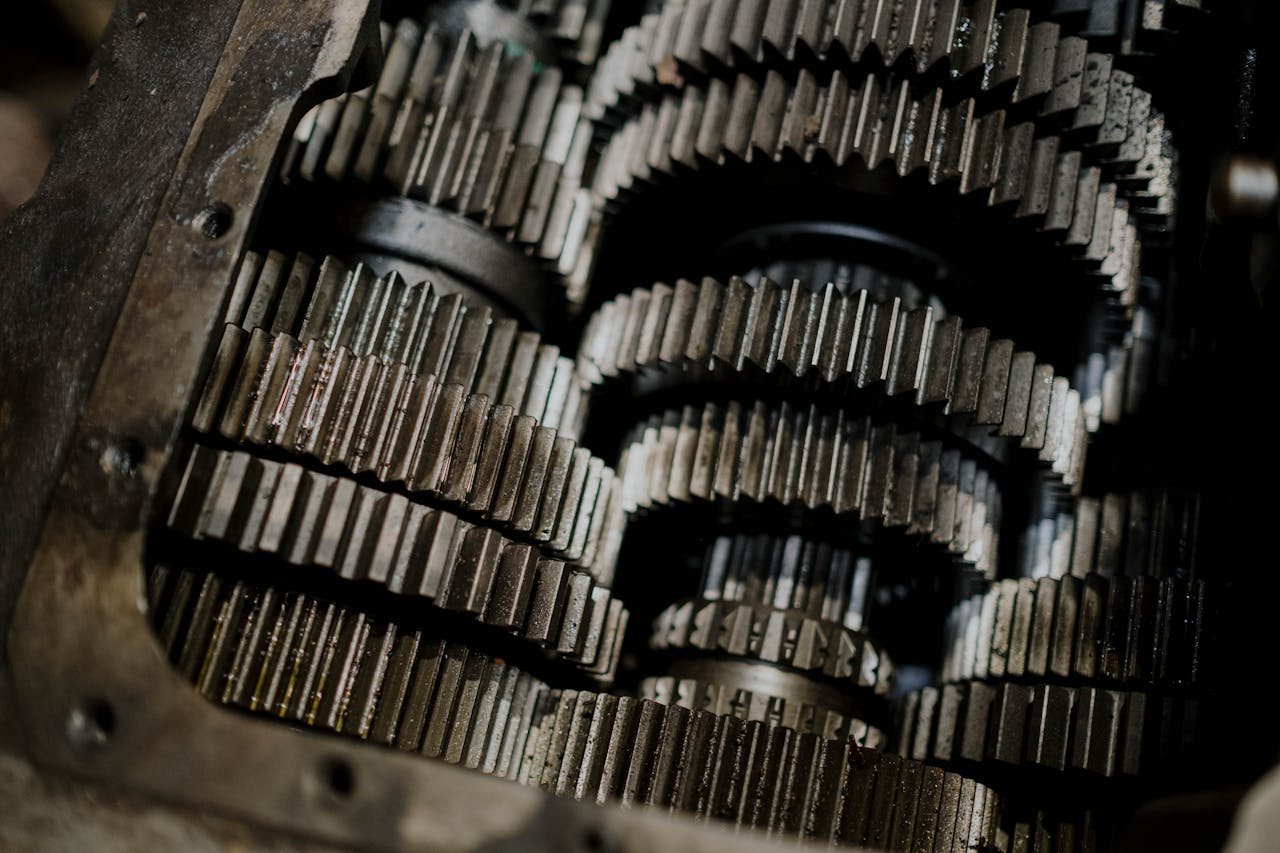
You installed 33-inch tires on your truck. It looks amazing. But now it feels like you’re towing an invisible trailer everywhere you go. First gear is useless. Highway cruising has the engine screaming—or lugging. Fuel economy tanked.
Welcome to the world of gear math. Here’s why bigger tires make everything worse, and how to fix it.
The Problem: Tires Are Gears
Your tires are the final gear in your drivetrain. When you make them bigger, you’re effectively adding a taller gear ratio. The engine has to work harder to turn them.
Think of it like a bicycle. Stock tires are like a comfortable middle gear. 33s are like shifting into a higher gear—great for top speed, terrible for acceleration and hills.
The Math That Explains Everything
Here’s the key relationship:
Effective Ratio = Axle Ratio × (Stock Tire Diameter / New Tire Diameter)Example: Your truck has 3.73 gears and stock 30” tires. You install 33” tires:
Effective Ratio = 3.73 × (30 / 33) = 3.39You’ve essentially dropped from 3.73 gears to 3.39 gears. That’s like having a much taller axle ratio. Your truck now accelerates like it has 3.42 gears—which is why it feels gutless.
Calculate Your Regear
Enter your current gears, old tires, and new tires to see exactly what ratio you need.
Find Your Ideal Ratio →What “Regearing” Actually Fixes
To restore your truck’s original feel, you need to install a lower (numerically higher) axle ratio. The formula:
New Ratio = Stock Ratio × (New Tire Diameter / Stock Tire Diameter)Using our example:
New Ratio = 3.73 × (33 / 30) = 4.10With 4.10 gears and 33” tires, your truck will feel exactly like it did with 3.73 gears and 30” tires. Same acceleration, same highway RPM, same fuel economy.
Real-World Gear Recommendations
Here’s a quick reference for common scenarios:
| Stock Gears | Stock Tires | New Tires | Recommended Gears |
|---|---|---|---|
| 3.21 | 29” | 33” | 3.73 |
| 3.42 | 30” | 33” | 3.73 |
| 3.73 | 30” | 33” | 4.10 |
| 3.73 | 30” | 35” | 4.56 |
| 4.10 | 32” | 35” | 4.56 |
| 4.10 | 32” | 37” | 4.88 |
These are approximations. The calculated “ideal” ratio often falls between available gear sets, so you choose the closest option.
The 15% Rule
Here’s a useful guideline: for every 15% increase in tire diameter, you lose roughly one gear position worth of acceleration.
- 30” to 33” = 10% increase = noticeable loss
- 30” to 35” = 17% increase = significant loss
- 30” to 37” = 23% increase = painful loss
If you’re going up more than 10%, regearing is almost mandatory for a driveable truck.
Why Not Just Live With It?
Some people try to adapt. Here’s what happens:
Acceleration: You have to rev higher and shift later to get moving. First gear becomes almost useless. Merging onto highways gets sketchy.
Fuel economy: Your engine runs outside its efficient RPM range. You’re either lugging at low RPM or over-revving. Either way, you burn more fuel.
Transmission wear: The transmission has to work harder. You’re often in the wrong gear for conditions. This adds wear over time.
Towing: Whatever your tow rating was? Cut it significantly. The truck that could pull 8,000 lbs now struggles with 5,000.
The Cost of Regearing
Let’s be real—regearing isn’t cheap. Expect:
- Parts: $300-600 for a quality gear set
- Labor: $400-800 for professional installation
- Both axles: Double everything for 4WD trucks
That’s $1,500-3,000 all in. But consider: you already spent money on tires. You might spend money on a tuner trying to “fix” it. And you’ll spend more on gas forever. The regear actually solves the problem.
What About a Programmer/Tuner?
A tuner can adjust shift points and throttle response. Some can correct speedometer calibration. But they cannot change physics.
The engine still has to spin the same number of times to turn those bigger tires. No software can fix that. Tuners are band-aids; regearing is the cure.
Should You Regear Before or After?
Regear before if you:
- Know exactly what tire size you’re going with
- Want the best experience from day one
- Are doing a full build anyway
Regear after if you:
- Want to make sure you like the tires first
- Might go bigger later and don’t want to regear twice
- Need to budget it separately
Most people end up regretting not regearing. The few who don’t regear either have very modest lifts (31s on a truck that came with 30s) or have superhuman patience.
Bottom Line
Big tires need matching gears. It’s not optional if you want your truck to drive well. Calculate the correct ratio, budget for the work, and enjoy your truck the way it’s supposed to feel—even with 35s rolling underneath it.