Will These Wheels Fit? How to Calculate Offset and Poke
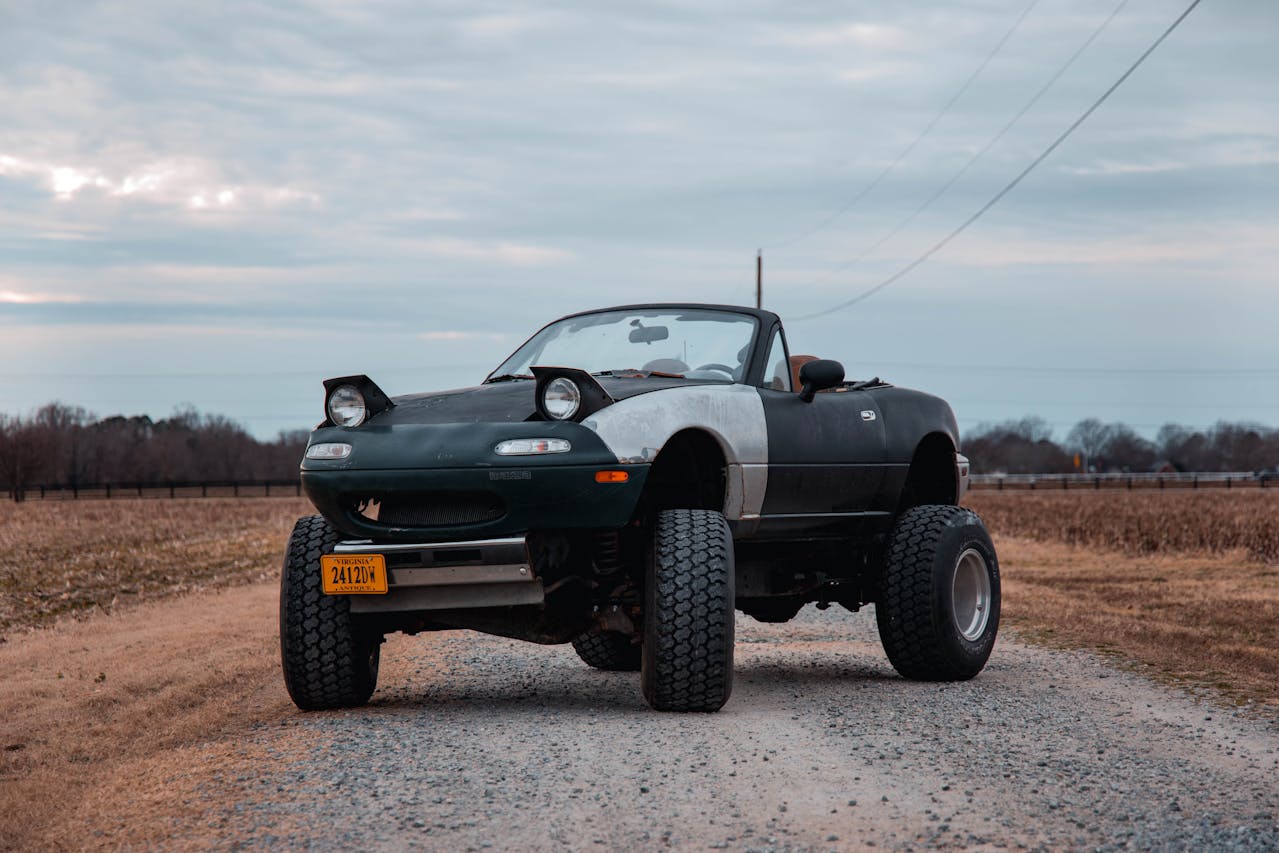
You found the perfect wheels online. They look incredible on that build thread. But will they actually fit your vehicle without rubbing, poking out too far, or hitting suspension components?
Wheel fitment isn’t just about bolt pattern. Offset, width, and backspacing determine whether those wheels work—or become an expensive lesson.
Understanding Offset
Offset is the distance from the wheel’s centerline to the mounting surface (where it bolts to the hub). It’s measured in millimeters and comes in three types:
- Positive offset (+): Mounting surface is toward the outside (street side)
- Zero offset (0): Mounting surface is at the centerline
- Negative offset (-): Mounting surface is toward the inside (suspension side)
Most stock wheels have positive offset. Trucks might run +15 to +40mm. Cars often run +35 to +50mm.
The Offset Formula
When you change offset, the wheel shifts position. Here’s how to calculate the difference:
Position Change = Stock Offset - New OffsetIf your stock wheels are +44mm and you’re looking at +20mm wheels:
44 - 20 = 24mm outwardThat wheel will sit 24mm (about 1 inch) further out than stock.
Check Your Fitment
Enter your stock and new wheel specs to see exactly how much poke or tuck you'll get.
Calculate Wheel Fitment →Width Matters Too
Offset alone doesn’t tell the whole story. A wider wheel changes things even at the same offset.
Example: Going from a 17x8 +44 to a 17x9 +44:
- The wheel is 1 inch wider (25.4mm)
- Half goes inward, half goes outward
- Net result: 12.7mm more poke AND 12.7mm less inner clearance
This is why you can’t just match offset numbers—you have to account for width changes.
Calculating Inner and Outer Clearance
The complete formula considers both offset and width:
Outer edge position (poke):
Poke Change = (Stock Offset - New Offset) + (New Width - Stock Width) / 2Inner edge position:
Inner Change = (New Offset - Stock Offset) + (New Width - Stock Width) / 2Real Example: Truck Wheel Upgrade
Your F-150 has stock 17x7.5 +44mm wheels. You want 20x9 +0mm wheels.
Outer change (poke):
(44 - 0) + (9 - 7.5) × 25.4 / 2 = 44 + 19 = 63mm pokeThat’s 2.5 inches of poke beyond stock. You’ll likely need:
- Fender flares or trimming
- Possible leveling kit
- Wheel spacers are NOT the answer (they add stress)
Inner change:
(0 - 44) + (9 - 7.5) × 25.4 / 2 = -44 + 19 = -25mmYou actually gain 25mm of inner clearance. The wheel moves outward overall.
Backspacing: The Old School Method
Before offset became standard, backspacing was used. It’s the distance from the back edge of the wheel to the mounting surface.
Converting between them:
Backspacing = (Width / 2) + OffsetA 9” wide wheel with +20mm offset:
(9 / 2) + (20 / 25.4) = 4.5 + 0.79 = 5.29" backspacingSome wheel manufacturers still spec backspacing, especially for trucks and off-road wheels.
Common Fitment Issues
Rubbing at full lock: The tire contacts the fender liner or control arm when steering is turned all the way. Often solvable with minor trimming.
Rubbing over bumps: The tire hits the fender when suspension compresses. Might need fender rolling, smaller tires, or more positive offset.
Rubbing on inner components: The tire or wheel contacts brake calipers, struts, or control arms. This is serious—you need different specs or spacers (not ideal).
The “Flush” Look
For that flush fitment where wheels align perfectly with fenders, you typically need:
- Lower offset than stock (more poke)
- Possibly wider wheels
- Correct tire size to fill the wheel
Aggressive fitments (negative offset, stretched tires) push the limits. What looks good on Instagram might rub horribly in real life with passengers or cargo.
Safe Offset Ranges
As a general rule:
- ±10mm from stock: Usually safe, no modifications needed
- ±20mm from stock: Might work, check clearances carefully
- ±30mm+ from stock: Likely needs modifications
These are guidelines, not guarantees. Every vehicle is different, and factors like suspension type, fender shape, and tire size all matter.
Before You Buy
- Know your stock specs exactly (width, offset, bolt pattern, center bore)
- Research your specific vehicle on fitment galleries
- Calculate the changes using actual numbers
- Consider tire size in your planning
- Have a backup plan if fitment doesn’t work
Aftermarket wheels can transform your vehicle’s look. Just make sure the math works before you commit.