Towing Capacity Is a Lie: What Your Truck Can Actually Pull
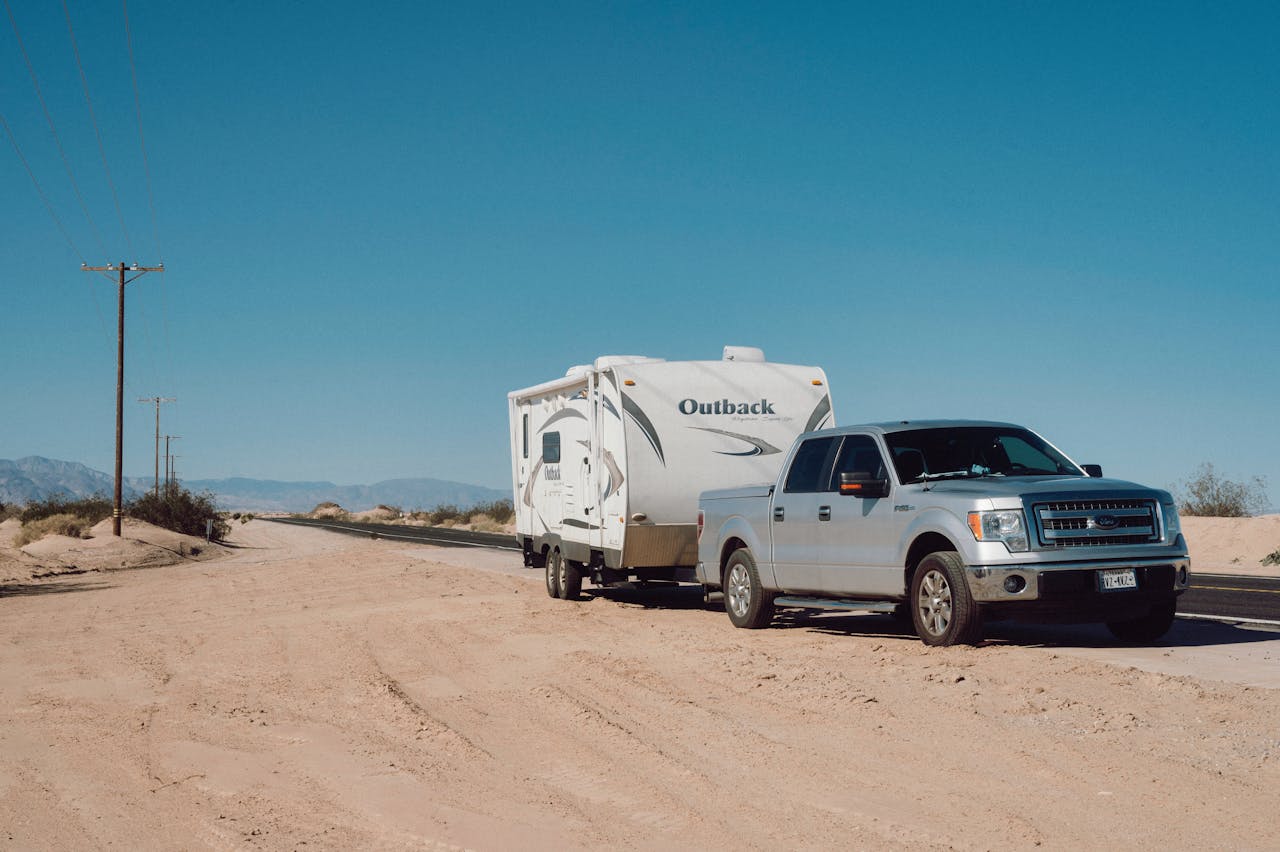
Your truck’s sticker says “Max Towing: 12,000 lbs.” So you can tow a 12,000-pound trailer, right?
Not even close. That number is a fantasy. Here’s what your truck can actually handle in the real world.
How Manufacturers Get Those Numbers
That impressive max tow rating? It assumes:
- Single cab, short bed (lightest configuration)
- No passengers except a 150-lb driver
- No cargo in the bed
- Specific (often base) engine/axle combo
- Perfect conditions
The moment you add a second person, tools in the bed, or a full tank of diesel, that number drops.
The Ratings That Actually Matter
Forget max tow. These are the limits that constrain you:
GVWR (Gross Vehicle Weight Rating): What your truck can weigh fully loaded. Includes the truck, passengers, cargo, AND tongue weight from the trailer.
GCWR (Gross Combined Weight Rating): The maximum total weight of truck + trailer + everything in both.
Payload Capacity: How much weight you can add to the truck (passengers + cargo + tongue weight).
Calculate Your Real Capacity
Enter your truck's specs and actual loads to see what you can safely tow.
Calculate Towing Margin →Real-World Example
Let’s work through a typical half-ton truck:
2023 F-150 SuperCrew 4x4:
- Curb weight: 5,100 lbs
- GVWR: 7,050 lbs
- Payload capacity: 1,950 lbs (door sticker)
- Max tow rating: 11,500 lbs (advertised)
Your actual load:
- Driver: 200 lbs
- Passenger: 180 lbs
- Stuff in the cab: 40 lbs
- Toolbox and gear in bed: 250 lbs
- Total added: 670 lbs
Remaining payload: 1,950 - 670 = 1,280 lbs
Here’s the critical part: Tongue weight is typically 10-15% of trailer weight. At 12% of an 8,000-lb trailer:
- Tongue weight: 960 lbs
- Remaining payload after tongue: 1,280 - 960 = 320 lbs margin
You’re legal, but barely. Add another passenger or more gear and you’ve exceeded payload.
The Payload Problem
Payload is usually the first limit you hit. Here’s why:
Modern trucks have high tow ratings because engines are powerful and brakes are good. But the chassis can only hold so much weight ON the truck.
A crew cab with four adults (600+ lbs) and typical gear might use half the payload before hooking up a trailer.
Example:
- Payload capacity: 1,500 lbs
- Four passengers: 650 lbs
- Cooler and bags: 100 lbs
- Remaining for tongue weight: 750 lbs
- Max trailer at 12% tongue: 6,250 lbs
Your “12,000-lb tow capacity” truck can actually only tow 6,250 lbs with your family aboard.
The Scale Test
The only way to know for sure is to weigh your setup:
- Weigh truck alone (no trailer)
- Add passengers and cargo, weigh again
- Hook up trailer, weigh combined
- Weigh each axle separately (especially rear)
Compare to:
- GVWR (truck with tongue weight must be under)
- GAWR (individual axle limits)
- GCWR (truck + trailer together)
Many truck stops have CAT scales. $12 for peace of mind and legal compliance.
What Happens If You Exceed Limits
Overloaded payload:
- Rear suspension bottoms out
- Poor handling and braking
- Accelerated wear on suspension, brakes, tires
- Potential frame damage
- Insurance may deny claims
Overloaded tow capacity:
- Transmission overheating
- Brake fade (can’t stop)
- Engine overheating on grades
- Loss of control in emergencies
- Potential catastrophic failure
This isn’t theoretical. Overloaded trucks cause accidents regularly.
The “I’ve Done It Before” Fallacy
“I towed 14,000 lbs with this truck and it was fine.”
Maybe. But:
- You might have been overloaded and lucky
- Conditions might have been perfect (flat, no wind, cool day)
- “Fine” at the time doesn’t mean no damage was done
- One emergency stop could have been disaster
Professional tower operators stay within limits because they’ve seen what happens when people don’t.
Buying for Towing
If you know you’ll tow regularly:
Prioritize:
- Higher payload (look at door sticker, not ad)
- Tow package (usually includes transmission cooler)
- Lower axle ratio for grade ability
- Integrated trailer brake controller
Consider:
- 3/4-ton or 1-ton if towing heavy frequently
- Heavy-duty suspension options
- Diesel for sustained towing
A half-ton with a heavy camper or boat is often over its limits. A 3/4-ton doing the same job has margin for safety.
The 80% Rule
Many experienced towers recommend staying at 80% of rated capacity:
- Better control in emergencies
- Less strain on drivetrain
- Longer component life
- Legal margin for error
If your truck can tow 10,000 lbs, plan for 8,000 lb trailers max.
Calculate Before You Buy
Before buying a trailer:
- Know your truck’s actual payload (door sticker)
- Calculate typical passenger and cargo weight
- Subtract for tongue weight
- That’s your real towing capacity
- Add margin for safety
That 10,000-lb travel trailer might require a 3/4-ton truck to tow safely—not the half-ton the brochure suggests.
The advertised number is marketing. The math is physics. Physics wins.