Quarter Mile Calculator: Predict Your ET Before You Hit the Strip
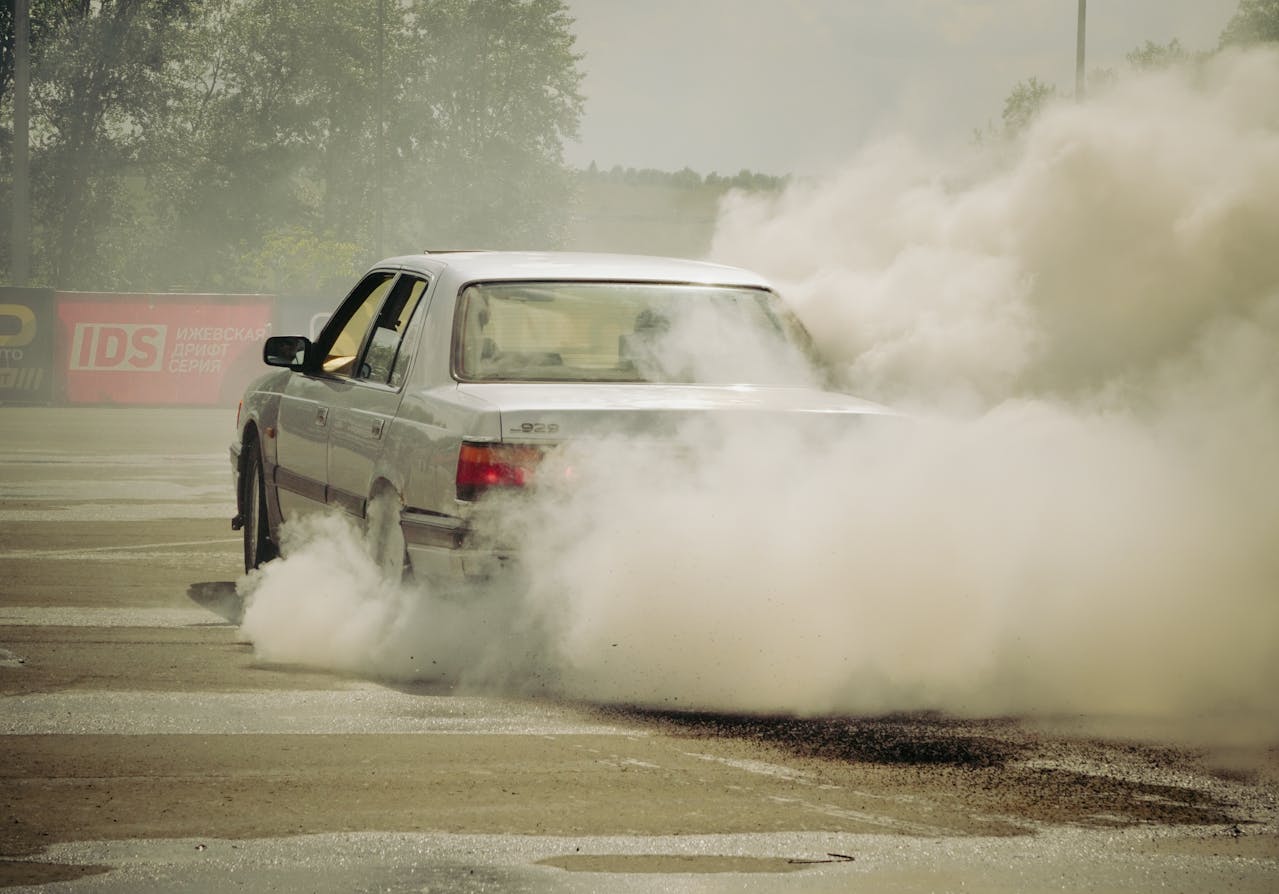
You’ve got 400 horsepower and a 3,500-pound car. What kind of quarter-mile time can you expect? Before you burn rubber and money at the track, let’s do some math.
The quarter mile has been drag racing’s standard distance since the 1950s. And for almost as long, people have been trying to predict ET (elapsed time) from basic vehicle specs.
The Classic Hale Formula
The most widely used quarter-mile prediction comes from Roger Hale’s work in the 1970s. He analyzed thousands of drag strip runs and developed these formulas:
Elapsed Time (ET):
ET = 5.825 × (Weight/HP)^0.333Trap Speed (mph):
Trap = 234 × (HP/Weight)^0.333These work surprisingly well for a wide range of vehicles, from economy cars to muscle cars to purpose-built dragsters.
Run Your Numbers
Enter your horsepower and weight to predict your quarter-mile time and trap speed.
Predict Your ET →Real-World Example
Let’s calculate for a typical modified sports car:
- Weight: 3,400 lbs (with driver)
- Power: 450 whp
ET calculation:
ET = 5.825 × (3400/450)^0.333
ET = 5.825 × (7.56)^0.333
ET = 5.825 × 1.96
ET = 11.4 seconds
Trap speed:
Trap = 234 × (450/3400)^0.333
Trap = 234 × (0.132)^0.333
Trap = 234 × 0.51
Trap = 119 mph
So our 450-whp car should run about 11.4 @ 119 mph. How does this compare to reality?
Why Predictions Miss (In Both Directions)
You Might Run Slower If:
Traction is limited: The formula assumes you hook up and go. Wheel spin eats your ET alive. A 500-hp FWD car spinning through first and second gear might run 13s instead of 11s.
Driver skill is lacking: Reaction time doesn’t affect ET (only overall time), but shifting, launching, and driving in a straight line all matter. New racers easily leave a second on the table.
Conditions are poor: Hot air is thin air. A car that runs 11.5 on a cool night might run 12.0 on a hot afternoon. Track prep matters too.
Weight is understated: That “3,200 lb” car with a driver, full tank, and gear might be 3,600 lbs at the starting line.
You Might Run Faster If:
You have sticky tires: Drag radials or slicks vs all-seasons can be worth half a second or more.
Gearing is optimized: Short gears that keep you in the powerband improve acceleration.
Aerodynamics help: Though aero doesn’t matter much in the quarter, some cars get a bit of lift that hurts them.
Power is underrated: Dyno numbers vary. Your “400 whp” might be 430 whp on a different dyno.
Wheel HP vs Crank HP
This matters a lot. The formula works with wheel horsepower (what actually reaches the ground). Manufacturer ratings are crank horsepower (at the flywheel).
Typical drivetrain losses:
- Manual FWD: 10-15%
- Manual RWD: 12-17%
- Automatic: 15-20%
- AWD: 18-25%
A car rated at 400 crank HP with an automatic might only put 320-340 HP to the wheels. Use wheel HP for predictions.
The ET/Trap Speed Relationship
ET tells you how fast you accelerated on average. Trap speed tells you how fast you were going at the end. They don’t always correlate.
High trap, slow ET: Good top-end power but poor launch. The car speeds up but starts slow.
Low trap, fast ET: Great launch but runs out of steam. The car starts strong but doesn’t accelerate as hard at speed.
A well-setup car balances both—strong launch AND pulls hard through the traps.
Benchmark Times
Here are typical quarter-mile runs for reference:
| Car Type | ET | Trap |
|---|---|---|
| Economy car (150 hp) | 16.5s | 85 mph |
| Sports car (300 hp) | 13.5s | 105 mph |
| Muscle car (450 hp) | 12.0s | 115 mph |
| Supercar (600 hp) | 10.8s | 130 mph |
| Tesla Plaid | 9.2s | 155 mph |
| Top Fuel | 3.7s | 330 mph |
If your math says you should run 12s but you’re running 14s, something’s wrong—usually traction or driver.
Improving Your ET
Launch harder: The first 60 feet set the tone. A 1.8-second 60-foot vs a 2.2-second 60-foot is almost half a second of total ET.
Shift better: Missed shifts or slow shifts cost time. Know your shift points.
Reduce weight: Every 100 lbs is worth about 0.1 second in the quarter.
Add power: Every 30-50 hp (depending on the car) is worth about 0.1 second.
Better traction: Tires, suspension setup, and weight transfer all help put power down.
Using Predictions Wisely
The calculator gives you a baseline. It says “with perfect traction and decent driving, here’s what’s possible.” Your first passes will likely be slower. As you learn the car and track, you’ll approach the predicted number.
If you consistently beat the prediction, either your power is underestimated or you’re a better driver than most. If you’re way off the prediction, diagnose why—it’s usually traction, weight, or driver technique.