Owner-Operator Math: What $3/Mile Actually Means
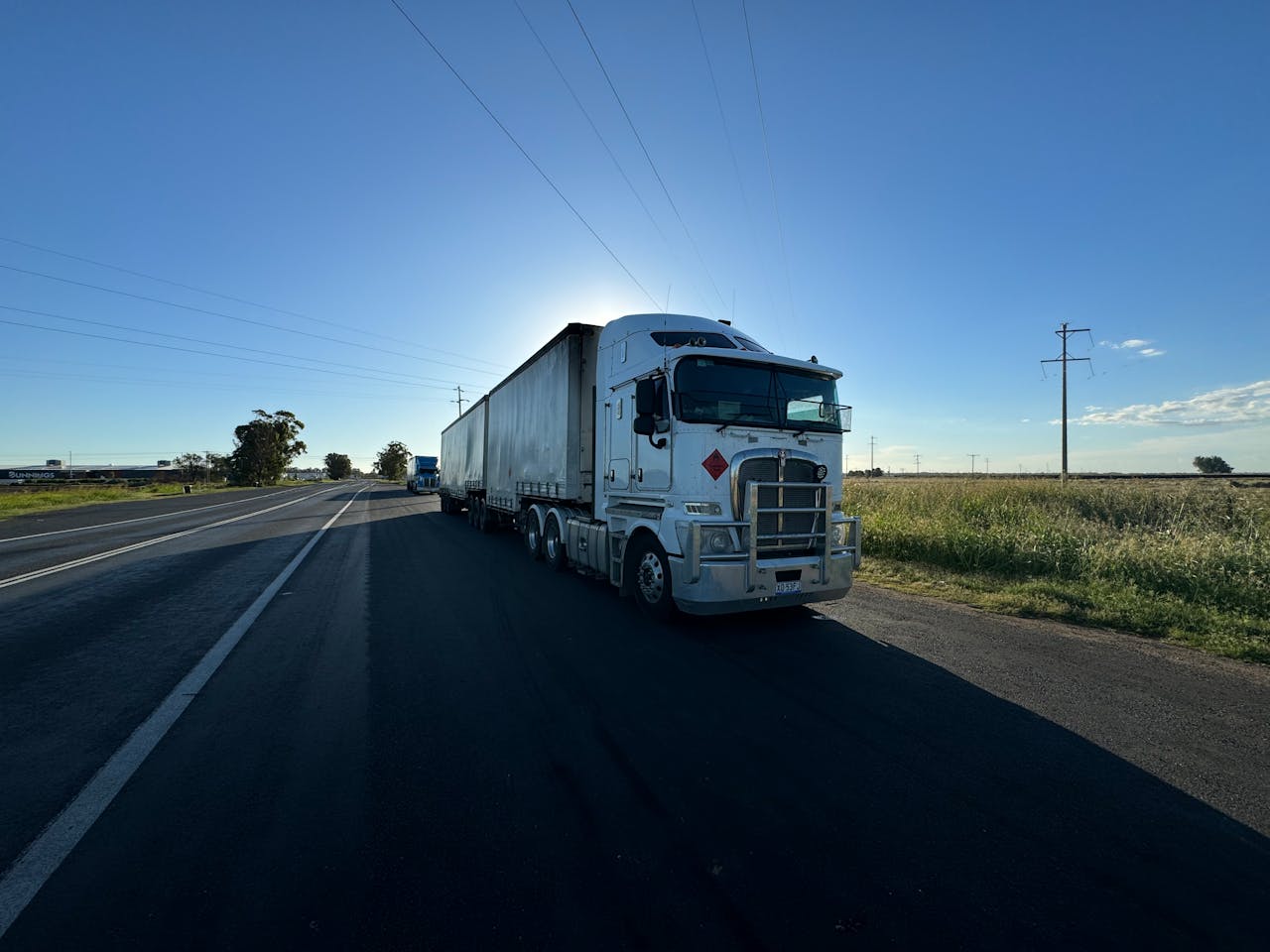
The broker offers $3.00 per mile for a 500-mile load. That’s $1,500 gross. Sounds decent, right?
But what’s your actual profit? If you don’t know your cost per mile, you can’t answer that. And many owner-operators don’t know their real numbers.
What Goes Into Cost Per Mile
Your cost per mile (CPM) includes everything it takes to move your truck:
Fixed costs (same whether you drive or not):
- Truck payment
- Insurance (liability, cargo, physical damage)
- Permits and licenses
- Health insurance (yours)
- Parking/yard fees
- ELD subscription
- Accounting/bookkeeping
Variable costs (increase with miles):
- Fuel
- Maintenance and repairs
- Tires
- Tolls
- Scale fees
- Lumpers
Often forgotten:
- Depreciation (if truck is paid off)
- Self-employment taxes
- Reserve fund for breakdowns
- Your actual pay
Calculate Your True CPM
Enter your costs to see your actual cost per mile and required rate.
Calculate Cost Per Mile →Breaking Down Real Numbers
Let’s calculate for a typical owner-operator running 10,000 miles/month:
Fixed Costs (Monthly)
| Expense | Amount |
|---|---|
| Truck payment | $2,200 |
| Insurance | $1,200 |
| Permits/IFTA | $150 |
| Health insurance | $600 |
| Parking | $150 |
| ELD/software | $50 |
| Accounting | $100 |
| Total Fixed | $4,450 |
Fixed CPM: $4,450 ÷ 10,000 = $0.445/mile
Variable Costs (Per Mile)
| Expense | Per Mile |
|---|---|
| Fuel (7 MPG @ $4/gal) | $0.57 |
| Maintenance reserve | $0.10 |
| Tires (prorated) | $0.03 |
| Tolls/scales | $0.02 |
| Total Variable | $0.72/mile |
Total Operating Cost
Total CPM = Fixed + Variable
Total CPM = $0.445 + $0.72 = $1.165/mile
Running 10,000 miles at $1.165 CPM costs $11,650/month in expenses.
What About Your Pay?
Operating cost isn’t profit. You need to pay yourself.
If you want to make $70,000/year (about what a company driver earns):
Required pay: $70,000 ÷ 12 = $5,833/month
Pay per mile: $5,833 ÷ 10,000 = $0.58/mile
Total required rate:
Break-even + Pay = $1.165 + $0.58 = $1.75/mile minimumBack to That $3/Mile Load
Now we can evaluate:
- Gross: $3.00/mile × 500 miles = $1,500
- Operating cost: $1.165 × 500 = $583
- Net before pay: $1,500 - $583 = $917
Per-mile profit: $1.84/mile
That’s actually a good load. Your profit covers pay and builds reserve.
The Problem With Low Rates
What about a $1.50/mile load?
- Gross: $1.50 × 500 = $750
- Operating cost: $583
- Net before pay: $167
Per-mile profit: $0.33/mile
At 10,000 miles/month of $1.50 loads, you’d net $3,300—less than half of $70k/year pay target. You’re essentially working for minimum wage while destroying your truck.
Why Many O/Os Fail
They take loads based on gross revenue, not profit margin. Common mistakes:
Only counting fuel: “I get 7 MPG, fuel is $4, so my cost is $0.57/mile. A $2.00/mile load gives me $1.43 profit!”
No—you forgot insurance, payment, maintenance, and everything else.
Ignoring fixed costs: “The truck is parked anyway, I might as well take a cheap load.”
Your fixed costs accrue whether you move or not. Every mile needs to cover its share.
Not paying yourself: “I made $8,000 last month!”
Before or after paying yourself? Operating income isn’t personal income.
Deadhead Economics
Empty miles kill profitability. If you deadhead 100 miles to pick up that 500-mile load:
- Total miles: 600
- Total gross: $1,500
- Effective rate: $2.50/mile (not $3.00)
Always calculate your revenue per total mile, including repositioning.
Fuel Is Your Biggest Variable
At 7 MPG and $4/gallon, fuel is $0.57/mile. At 6 MPG and $5/gallon, fuel is $0.83/mile.
That swing of $0.26/mile is huge over 10,000 miles ($2,600/month difference).
Fuel efficiency matters:
- Proper tire pressure
- Speed management (55 vs 65 costs ~15% more fuel)
- Idle reduction
- Aerodynamic devices
The Minimum Rate You Should Take
Calculate your floor:
Minimum Rate = Operating CPM × 1.5For our example: $1.165 × 1.5 = $1.75/mile
Below this, you’re not making reasonable money. The 1.5x multiplier accounts for:
- Deadhead miles
- Downtime
- Reserve building
- Actual profit/pay
Some experienced O/Os use 1.8x or 2x as their minimum.
What Successful O/Os Do
Know their numbers: They track every expense and know their true CPM.
Set minimums: They won’t take loads below their threshold.
Factor in all miles: Revenue per total mile, not per loaded mile.
Build reserves: $10-20k cash reserve for breakdowns and slow periods.
Choose lanes wisely: Consistent routes reduce deadhead and build relationships.
Calculate Before You Accept
That $3/mile load? Great. That $1.80/mile load? Depends on your CPM. That $1.20/mile load? Almost certainly a loss.
Know your numbers. Run them on every load. Your business depends on it.