Engine Displacement Calculator: CC to Cubic Inches (And Why It Matters)
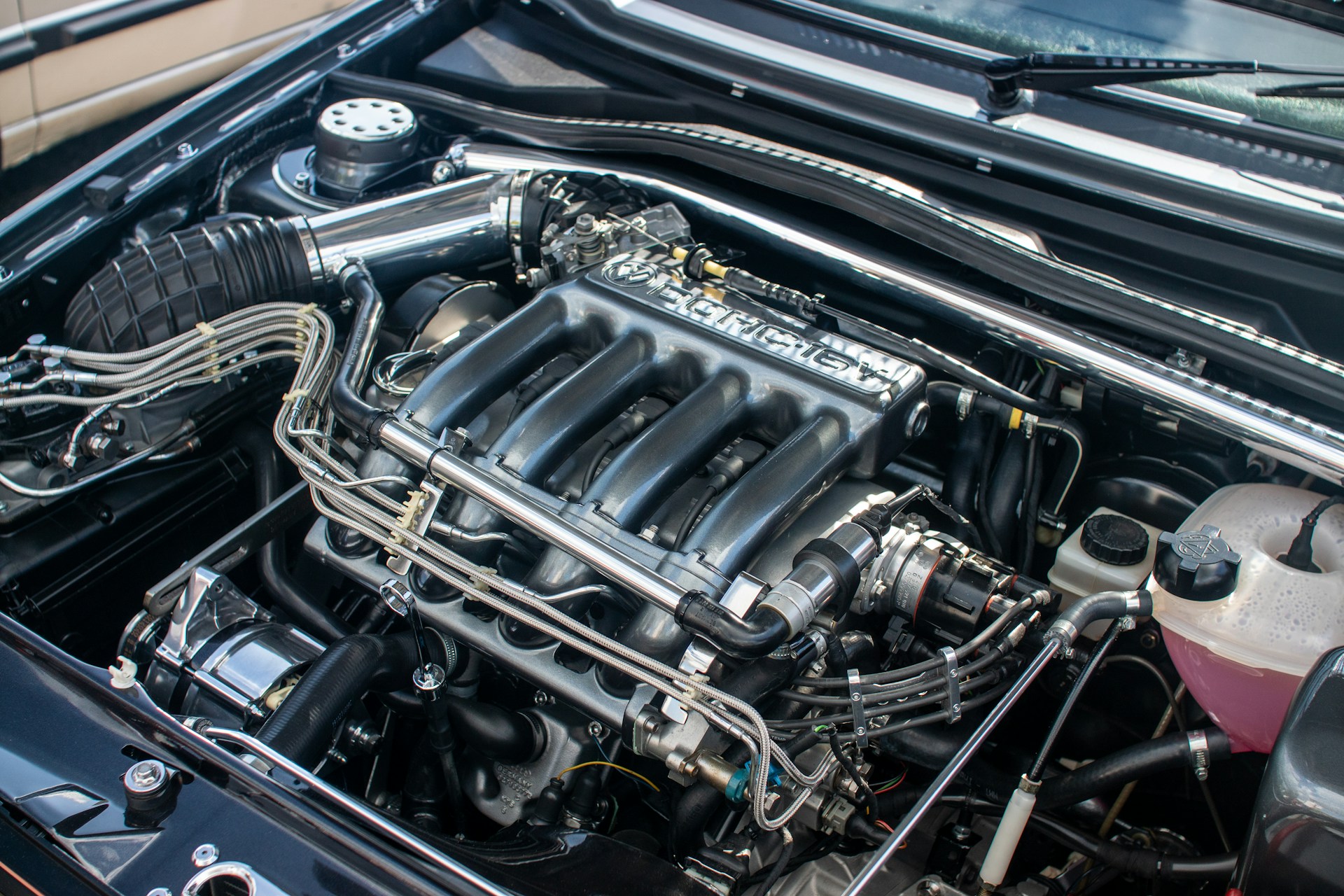
“It’s a 350.” “I’ve got a 5.7L.” “The new one is 6.2 liters.” “My bike is 600cc.”
These numbers all mean the same thing: engine displacement. But where do they come from, and what do they actually tell you?
What Is Displacement?
Displacement is the total volume swept by all pistons in one complete engine cycle. It’s the “size” of the engine.
The formula is simple:
Displacement = (π/4) × Bore² × Stroke × CylindersOr more intuitively:
Displacement = Cylinder Volume × Number of CylindersEach cylinder is essentially a tube. Bore is the diameter, stroke is the height (how far the piston travels). Calculate the volume of that tube, multiply by how many cylinders, done.
Run the Numbers
Enter bore, stroke, and cylinder count to calculate displacement in any unit.
Calculate Displacement →Real Example: The “350”
The classic Chevy 350 V8:
- Bore: 4.00 inches
- Stroke: 3.48 inches
- Cylinders: 8
Displacement = (3.14159/4) × 4.00² × 3.48 × 8
Displacement = 0.7854 × 16 × 3.48 × 8
Displacement = 350.0 cubic inches
Hence “350.” The name is the displacement.
Converting Units
Cubic inches to liters:
Liters = Cubic Inches × 0.01639Liters to cubic inches:
Cubic Inches = Liters × 61.024CC (cubic centimeters) to liters:
Liters = CC ÷ 1000So that 350 cubic inch engine:
350 × 0.01639 = 5.74 litersGM rounds this to 5.7L. Same engine, different number systems.
Common Conversions
| Cubic Inches | Liters | Common Names |
|---|---|---|
| 302 | 4.9L | Ford 5.0, Chevy 302 |
| 305 | 5.0L | Chevy 305 |
| 350 | 5.7L | Chevy 350 |
| 383 | 6.3L | Mopar 383 |
| 400 | 6.6L | Chevy 400 |
| 454 | 7.4L | Chevy big block |
| 460 | 7.5L | Ford big block |
Note how “5.0” can mean different actual displacements depending on manufacturer rounding.
Why Bore vs Stroke Matters
Two engines with identical displacement can have very different characteristics:
Oversquare (bore > stroke):
- Higher RPM potential
- More valve area possible
- Common in performance engines
Undersquare (stroke > bore):
- More torque at lower RPM
- Better fuel efficiency
- Common in trucks and diesels
Square (bore = stroke):
- Balanced characteristics
- Many modern engines target this
Example: Both are roughly 350 cubic inches:
- Chevy 350: 4.00” bore × 3.48” stroke (oversquare)
- Ford 351W: 4.00” bore × 3.50” stroke (nearly square)
The Chevy traditionally revs higher; the Ford makes more low-end torque.
What Displacement Tells You
Displacement correlates with:
Potential power: More displacement means more air/fuel per cycle means more potential energy. All else equal, bigger = more power.
Torque delivery: Larger displacement tends to make torque easier to achieve, especially at low RPM.
Fuel consumption: Bigger engines typically use more fuel (though efficiency varies).
What it doesn’t tell you:
Actual power output: A tuned 2.0L can make more power than a stock 5.0L Efficiency: Modern small turbos can be as powerful and more efficient than larger NA engines Character: A revvy 4-cylinder feels very different from a lazy V8 of equal power
Stroker Engines
A “stroker” increases displacement by using a crankshaft with longer stroke:
Chevy 350 → 383 stroker:
- Stock: 4.00” bore × 3.48” stroke = 350ci
- Stroker: 4.00” bore × 3.75” stroke = 377ci
More stroke = more displacement from the same block. Popular for building power without a complete engine swap.
Bored Engines
Boring increases displacement by enlarging the cylinders:
350 bored 0.030” over:
- Stock: 4.000” bore = 350ci
- Bored: 4.030” bore = 355ci
Combined with a stroker crank, you get builds like the popular “383” (actually anywhere from 377-396ci depending on exact specs).
Modern “Displacement On Demand”
Some modern engines have cylinder deactivation—they shut down cylinders at cruise:
GM 6.2L V8:
- Full power: 8 cylinders, 6.2L displacement
- Cruising: 4 cylinders, 3.1L effective displacement
This lets big engines get decent fuel economy while still having power available when needed.
Electric Doesn’t Have Displacement
One reason EV specs seem weird: there’s no displacement equivalent. Electric motors are rated by power (kW) and torque (Nm) directly, not by size.
A Tesla Model S motor is about the size of a watermelon but makes 600+ HP. No displacement to measure.
Why This All Matters
Understanding displacement helps you:
- Compare engines fairly across different naming conventions
- Understand potential for modifications (boring, stroking)
- Predict characteristics (torque vs rev-happy)
- Make sense of specs when shopping for cars or engines
That “6.2L” badge tells you exactly how much air the engine can breathe per cycle—and from there, you can estimate power potential, fuel use, and character.